Buying a Living Room Set Without Locking Yourself Into a Bad Furniture Layout
A 2024 systematic review of 41 ergonomics papers found that only a small number of authors in the reviewed literature evaluated furniture used in homes. The finding does not define residential comfort, but it exposes the purchasing problem: a matching sofa, loveseat, and chair can look coordinated without fitting the room or the people using it. Matching upholstery does not equal compatible furniture.

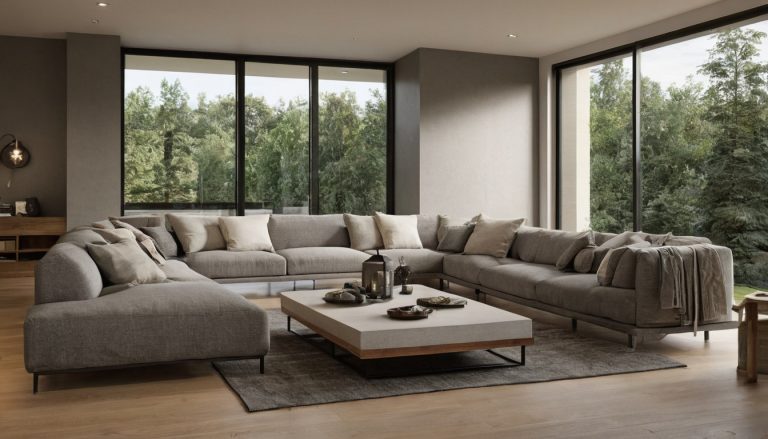
Buying a Living Room Set Without Locking Yourself Into a Bad Furniture Layout shown as a planning reference for layout, scale, and material decisions.
Should you buy a livingroom set or specify separate furniture pieces?
A livingroom set is worth buying only when every included piece fits a measured plan, serves the household, and can be returned or reconfigured without disproportionate cost.
A livingroom set is a retailer bundle or coordinated collection containing a sofa plus one or more loveseats, chairs, recliners, or ottomans. Treat the set as a procurement package, not a shortcut around space planning.
| Buying option | Strongest use case | Layout risk | Procurement risk |
|---|---|---|---|
| Complete set | Stable room, predictable users, compatible dimensions | Duplicated arms, depth, or seating function | An unwanted piece can erase the bundle saving |
| Selected coordinated pieces | Visual consistency with tighter space control | Collection dimensions may still dominate the plan | Separate lead times or return terms |
| Mixed manufacturers | Awkward rooms, varied bodies, or likely moves | Poorly balanced scale or seat heights | Multiple deliveries, warranties, and fabric approvals |
A coordinated living room set works when the room and household are predictable
A complete set can reduce procurement effort when the plan is stable, access is sufficient, users share similar comfort needs, and the retailer offers workable remedies for damage or poor fit. Evaluate regular users, guests, children, pets, mobility needs, activities, and likely moves. Where wheelchair positioning matters, the 2010 ADA Standards specify a 30 by 48 inch clear floor space for accessible design, although residential requirements and individual transfer needs must be checked separately.
Separate living room furniture works when flexibility matters more than exact matching
Selected or mixed pieces often suit apartments, asymmetrical rooms, varied body types, and households combining upright and reclining use. Coordinate seat heights, visual weight, leg finish, upholstery undertone, and arm scale. This guidance applies to residential living rooms and dens, not commercial seating projects. The next decision is physical: what must be measured before ordering?
What must you measure before ordering a living room furniture set?
Measure the usable room envelope, fixed obstructions, operating positions, circulation routes, viewing position, and complete delivery path. Catalog width alone cannot prove that furniture will function after installation.

What must you measure before ordering a living room furniture set shown as an editorial reference for proportion and finish coordination.
The living room plan must record usable space rather than wall-to-wall dimensions alone
- Record wall lengths, windows, radiators, fireplaces, registers, outlets, built-ins, television position, ceiling constraints, and door swings.
- Mark frequently used travel routes and measure the remaining furnishable area instead of treating the room as an empty rectangle.
- Record recliners, sofa beds, and ottomans in both closed and operating positions.
The furniture delivery route must be checked from the vehicle to the final position
- Measure exterior and interior doors, corridors, corners, elevators, stairs, handrails, landings, and low ceilings.
- Compare the route with overall and packaged dimensions, diagonal depth, removable legs, detachable backs, and assembly requirements.
- Confirm carrier rules for stair carries, packaging removal, failed access, and building reservations.
Room fit and access fit are separate approvals. A sofa can fit its final wall yet fail at a stair turn.
Full-size furniture templates reveal conflicts before purchase
Use painter’s tape, paper, cardboard, or movable boxes to mark every footprint. Test door operation, walking routes, recliner extension, sofa-bed opening, footrests, and ottomans. A taped rectangle on the floor makes bulky arms and unusable corners visible before money changes hands.
Which furniture specifications determine whether a living room set will be comfortable?
Comfort depends on seat height, usable seat depth, back support, cushion construction, arm geometry, and how each person sits, rises, reads, watches television, or lounges.
Overall furniture depth and usable seat depth answer different questions
Overall depth defines the floor footprint. Usable seat depth measures support from the front edge to the compressed back cushion. Loose cushions and lumbar pillows can reduce that space. Also compare loaded seat height, inside width, arm height, back height, cushion firmness, and full recliner extension.

Which furniture specifications determine whether a living room set will be comfortable shown with floor, wall, and fixture relationships visible.
| Piece | Critical check |
|---|---|
| Sofa | Inside depth and shared usable width |
| Loveseat | Arm bulk versus two-person capacity |
| Lounge chair | Back support and arm position |
| Recliner | Operating clearance and exit effort |
| Ottoman | Leg-support height and circulation |
One matching seat profile may not fit every household member
Residential comfort has no universal dimension range. The ergonomics review identified gaps involving gender, changing populations, and cultural context within the literature it examined. A meaningful trial should include these checks:
- Sit long enough for the cushions to settle.
- Check foot support, knee position, back contact, and reading posture.
- Sit down and rise without using showroom furniture as a handhold.
- Operate recliners through their complete travel.
- Test transfer access where mobility equipment is relevant.
If one seat profile fails a regular user, specify another chair before accepting the complete set.
How do complete living room sets create layout lock-in?
Complete sets create layout lock-in when several large pieces repeat excessive depth, wide arms, fixed operating clearances, or identical functions. Approve a set only when every piece supports two realistic arrangements.
A living room set should pass the two-layout test
Layout one should address current viewing, conversation, and regular users. Layout two should accommodate a credible change, such as entertaining, moving the television, changing the household, or relocating to a comparable room. A handed sectional, deep sleeper sofa, or powered recliner fails when its orientation or operating zone works only once.
Nominal seating capacity can overstate useful seating
Useful capacity comes from inside width, cushion divisions, controls, consoles, and household preferences, not the advertised label. Wide arms and chaise sections consume floor area without necessarily adding comfortable positions.
A mixed furniture plan can preserve capacity with less duplicated bulk
| Hypothetical room | Bundle diagnosis | Mixed alternative |
|---|---|---|
| Compact apartment | Sofa, loveseat, and chair crowd the main route. | Sofa plus two movable chairs |
| Rectangular television room | Deep matching pieces create poor viewing angles. | Sofa, swivel chair, and ottoman |
| Room with several openings | Bulky arms interrupt circulation. | Compact sofa plus lighter chairs |
Calculate each footprint from verified width and depth, then add operating space separately. Extend the plan to coffee-table clearances and daily-use constraints. New furnishings can also affect indoor air quality; the U.S. Environmental Protection Agency recommends increased ventilation when using products that emit volatile organic compounds indoors.

How do complete living room sets create layout lock-in shown with floor, wall, and fixture relationships visible.
What should you check in the price, upholstery, delivery, and return terms?
The relevant cost is the delivered, usable, and recoverable cost, not the advertised bundle price.
A bundle discount has value only if every furniture piece is useful
Compare item prices, upholstery upgrades, tax, delivery, assembly, access surcharges, return freight, restocking charges, and damage remedies. Price complete, phased, and selected-piece purchases on the same date for the same configuration and delivery location.
Upholstery performance must match the household and cleaning process
Fabric documentation should identify fiber content, construction, finish, performance tests, cleaning instructions, and exclusions. Match the records to pets, children, sunlight, food use, and cleaning capacity. Abrasion performance alone does not establish cleanability, pilling resistance, or lifespan.
Custom and powered furniture requires stricter cancellation and service checks
Written terms should cover cancellation, modifications, lead times, access failure, concealed damage, comfort returns, parts, electrical service, warranties, and final-sale status. Retailer policies do not replace applicable consumer law.
Use this pre-purchase workflow before committing to a living room set
A sound purchase follows a dependency order that eliminates incompatible options before deposits and delivery charges become difficult to recover.
The living room set approval checklist should fit on one page
- Define users, activities, pets, and mobility needs.
- Measure the room and complete delivery route.
- Record each model, configuration, handedness, and dimension.
- Tape two full-size layouts.
- Trial the seats and inspect representative upholstery.
- Confirm landed cost, delivery, returns, warranty, and cancellation.
- Save samples, specifications, dated policies, and written confirmations.
A failed checkpoint determines the safer buying alternative
Failed room fit means reducing size or quantity. Failed user fit means mixing seat profiles. Failed access fit requires a verified modular, knock-down, or detachable model. Weak terms favor stock goods, another retailer, or delay. Do not order while any required dimension, clearance, delivery condition, or cancellation term remains unknown.
Living room set questions
What are the most common living room furniture layout mistakes when buying a complete set?
Common mistakes include measuring walls but not door swings, counting advertised rather than useful seats, overlooking recliner extension, and buying a surplus loveseat or chair solely to secure a bundle price.
Does the 2-2-1 rule for sofas work in every living room?
No. A plan with two sofas, two chairs, and one table is a composition idea, not a universal space-planning rule. Room openings, circulation, activities, and furniture dimensions take priority.
How should the 2/3 furniture rule be used when choosing a sofa?
Use the 2/3 rule as a visual starting point, not a fixed standard. A sofa occupying roughly two-thirds of a wall can still fail if arms, side tables, doors, or circulation consume the remaining space.